The Evolution of Faxing: Then & Now
- FAXAGE Blog Home
- How to Send an International Fax Online
- Online Fax vs. Secure File Sharing: Which is Better for Sensitive Documents?
- Do You Need a Home Phone for Fax?
- Fax Retention Policies: How Long Should Businesses Keep Faxes?
- DOWNLOADABLE: Free Fax Cover Sheet Template
- The Evolution of Faxing: Then & Now
- How to Use Fax Logs & Audit Trails for Better Reporting
- HIPAA Compliant Fax Cover Sheet
- UPDATED: Top Features to Look for in an Online Fax Service in 2026
- How to Tell if a Fax Went Through
- How to Send a Fax from iPhone Without an App
- How Long Does Faxing Take?
- Where Can You Go to Fax Something?
- API-Based Faxing: What Developers Should Know About Fax Integration
- How to Choose the Right Online Fax Plan for Your Business Size
- 10 Medical Professionals Discuss Online Faxing
- 10 Legal Experts Weigh In on Online Faxing
- Why Online Faxing is Imperative in the Legal Field
- Are Free Online Fax Services Safe?
- Are Online Fax Services Secure?
- FAXAGE Earns HITRUST Recertification
- Enhancing Year-End Tax Preparations with Online Faxing
- How to Transition Your Business from Traditional Faxing to Online Faxing: A Step-by-Step Guide
- Introducing FAXAGE System Status Monitoring
- Cost-Saving Strategies: How Online Faxing Reduces Overhead Expenses
- 50 Experts Weigh In: Entrepreneurs on HIPAA-Compliant Faxing
- HIPAA Compliant Faxing: Experts Weigh In On Why It Matters
- How to Send a Fax Without a Fax Machine
- Mobile Faxing: How Do I Fax From My Phone?
- The Millenial/Gen Z Guide to Faxing
- Faxing in a Hybrid or Remote Work Environment
- The Environmental Impact of Online Faxing
- FAXAGE Adds SSL Fax Capability
- FAXAGE Earns HITRUST Certification
- How Different Industries Use Online Fax
- FAXAGE App Released
- COVID-19 & Cloud Faxing
- FAXAGE Reviewed by FitSmallBusiness
- FAXAGE Adds SSO
- Faxploit Information
- Security Auditing Added
- Ottawa fax numbers added
- Vancouver fax numbers added
- London fax numbers added
- Hamilton fax numbers added
- Toronto fax numbers added
- Alaska fax numbers added
- Enhanced fax spam blocking features
- Toll Free Fax Numbers in 844 Released
- Secure Email to Fax with Thunderbird
- Toll Free 844 Coming Soon
- Free Software - FAXAGE Staff Member Picks
- Scan to Fax Tips
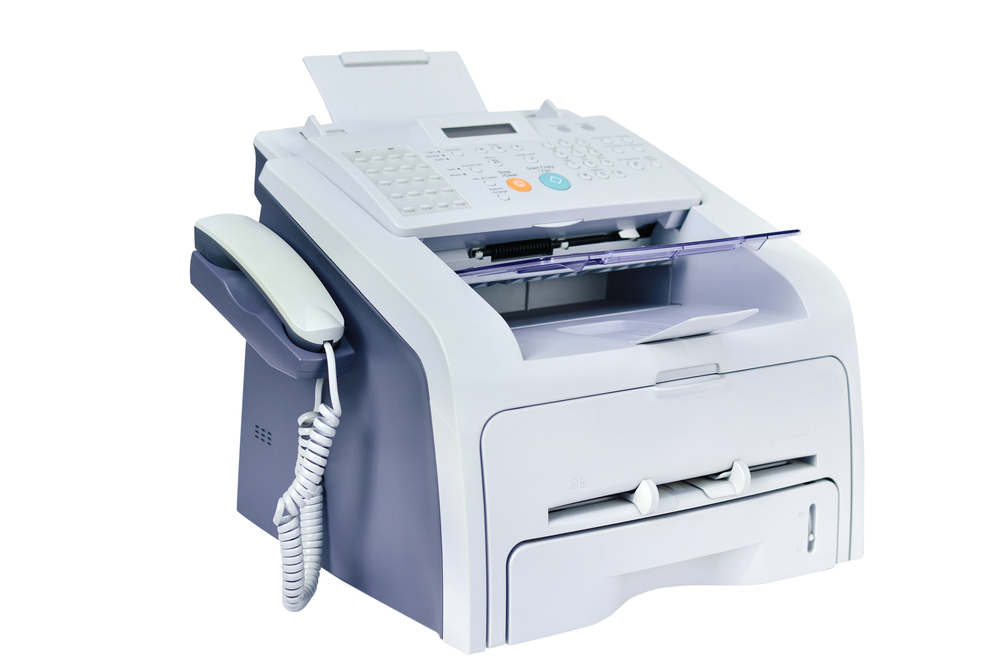
Faxing has survived every major communications shift of the last century. It outlasted telegrams, adapted through the rise of email, and remains deeply embedded in industries where document integrity, compliance, and speed still matter. That staying power is not accidental. Faxing has continually evolved from a mechanical novelty into a secure, digital business tool.
Today, many people think of faxing as an outdated office relic. In reality, the story is much more interesting. The fax has transformed from an early analog invention into a modern cloud-based workflow that supports healthcare, legal, government, finance, and other document-intensive sectors. The medium may look different now, but its core purpose remains the same: sending important documents reliably from one place to another.
For businesses evaluating modern communications tools, understanding that evolution matters. It helps explain why faxing is still relevant, why regulated industries continue to use it, and why online faxing through FAXAGE has become the practical next step for organizations that want greater efficiency without sacrificing security.
Below, we’ll look at where faxing began, how the fax machine shaped business communication, and why online faxing is now defining the next chapter.
History of Fax Machine
The history of the fax machine is really the history of business communication becoming faster, more distributed, and more document-centric.
From Experimental Invention to Office Technology
In its earliest stages, faxing was a technical experiment, dating back to the 1800s. In fact, faxing predates the telephone. Transmitting images over electrical signals was an impressive feat, but it was not yet practical for broad business use. The equipment was complex, expensive, and dependent on infrastructure that was still developing.
The foundation for fax communication was laid in 1843, when Scottish inventor Alexander Bain patented a device capable of transmitting images over wires. His work built on clock and telegraph technologies, using synchronized pendulums to scan and reproduce images remotely. That concept established the basic principle that still defines faxing today: scan a document, transmit the information, and reconstruct it at the destination.
This early invention was primitive compared to modern systems, but it was revolutionary in concept. It proved that written or visual information could be copied and sent across a distance without moving the original paper. Over time, subsequent inventors refined the technology, making it more accurate, more stable, and more commercially viable.
As telecommunications systems matured, fax technology became more functional. By the mid-20th century, facsimile systems were increasingly used in business and media settings. Still, it was the late 20th century that truly made the fax machine a fixture in offices around the world.
By the 1980s and 1990s, the fax machine had become a standard business tool. Offices used fax machines to send contracts, invoices, signed forms, legal notices, purchase orders, medical documentation, and internal communications. The process was straightforward: print the document, feed it into the machine, dial a number, and transmit it over a phone line.
For the first time, businesses could send paper documents across cities, states, and countries in minutes rather than days. That drastically improved turnaround times for approvals, transactions, and record-sharing.
Why the Fax Machine Became so Important
The fax machine solved a very specific business problem. Before widespread email adoption, organizations needed a way to transmit exact document copies quickly. Mail was slow. Couriers were expensive. Verbal confirmation over the phone was often insufficient for contracts or official paperwork.
Faxing delivered speed and formality. A transmitted page preserved signatures, layouts, annotations, and formatting in a way that made the document feel immediate and actionable. That was especially valuable in fields where documentation had legal, operational, or compliance significance.
This is one reason faxing remained common in healthcare, law, government, and business long after newer communication tools emerged. Even today, these sectors often rely on fax workflows for sensitive records, formal exchanges, and operational continuity. Industries handling official records continue to value faxing for security, privacy, and reliability.
The Limitations of Traditional Fax Machines
Despite their usefulness, traditional fax machines came with obvious drawbacks.
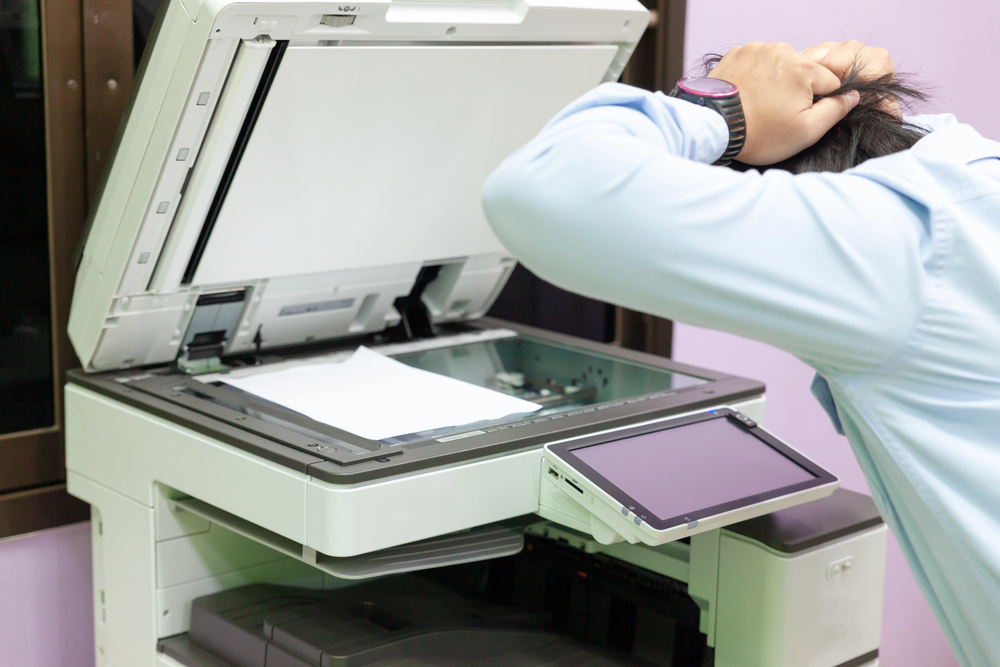
They required physical hardware, active phone lines, paper, ink or toner, maintenance, and physical presence. Employees had to be in the office to send, receive, monitor, or troubleshoot transmissions. Incoming documents were often automatically printed, which increased supply costs and created potential privacy risks if pages were left unattended.
Fax machines also did not fit well with modern workflows. The medium shifted from dedicated phone-line machines to internet fax services that operate through email, web portals, mobile apps, and APIs. As businesses became more mobile, distributed, and cloud-based, the need for a machine tethered to a single office location became increasingly impractical.
This tension created the conditions for the next stage of fax evolution: digital delivery through the internet. Businesses wanted to preserve the reliability and document-centric nature of faxing while removing the inefficiencies of legacy hardware. That demand gave rise to providers like FAXAGE, which modernize faxing without forcing organizations to abandon a communication method they still depend on.
The Future of Faxing
Faxing’s future is not mechanical. It is digital, integrated, mobile, and security-driven.
The biggest misconception about faxing is that its future depends on whether physical fax machines remain in offices. That is the wrong measure. The real question is whether organizations still need to send formal documents securely and reliably. The answer is yes. What has changed is the delivery model.
Why Faxing Still Matters
Even in an age of cloud collaboration and instant messaging, many businesses still need a channel for transmitting signed forms, regulated records, contracts, and documentation that must reach the right destination in a dependable format.
That need is especially strong in sectors such as healthcare, legal services, insurance, finance, and government. In these environments, communications are not judged only on convenience. They are judged on traceability, compliance support, reliability, and access control.
That is why the future of faxing is not disappearing. It is modernization.
Online Faxing
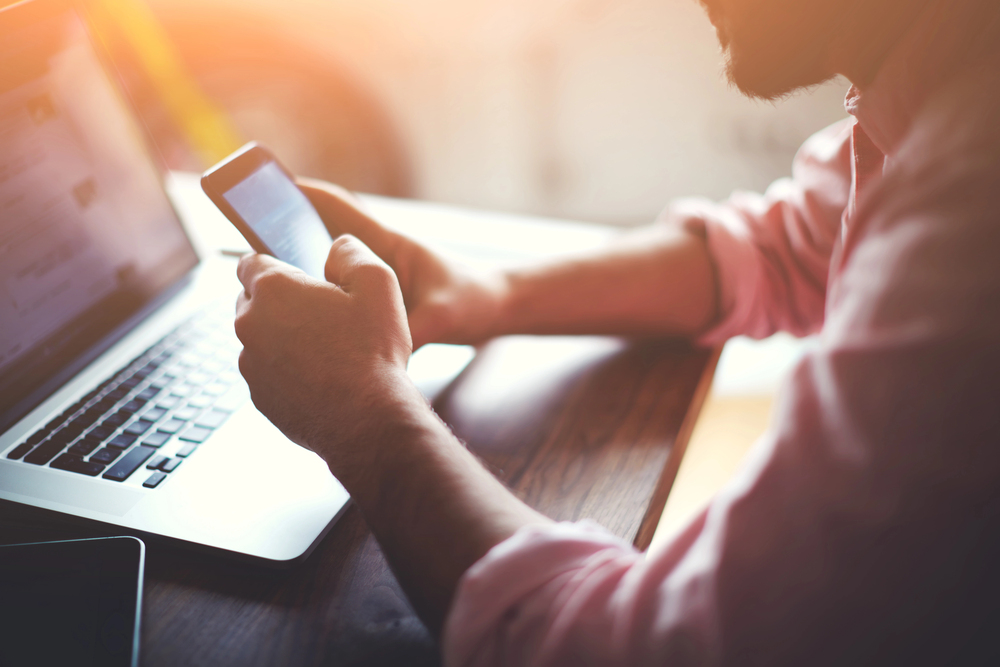
Online faxing is the clearest expression of that modernization. Instead of depending on bulky office equipment and analog phone lines, online faxing allows users to send and receive faxes through internet-connected tools such as email, web browsers, mobile devices, and application integrations.
This shift delivers several major advantages.
First, it makes faxing far more convenient. Employees can send or receive documents from anywhere with internet access, which supports remote work, distributed teams, and faster business processes. Rather than standing beside a machine, users can fax directly from the tools they already use. FAXAGE’s email fax options and mobile fax capabilities are designed around exactly that kind of flexibility.
Second, online faxing reduces cost and operational friction. Businesses no longer need to maintain physical fax hardware, buy as much paper or toner, or manage dedicated machine-related workflows. This makes online faxing both more efficient and more environmentally responsible. Faxing helps reduce unnecessary printing, paper waste, and machine energy use.
Third, online faxing is more scalable. Traditional fax systems are inherently limited by physical machines and office infrastructure. Internet faxing can support everything from individual users to enterprise-scale operations with thousands of users and very high document volume. Businesses that need to grow without rebuilding communications infrastructure benefit from that flexibility.
Fourth, the future of faxing is tightly linked to security. Online fax services are not automatically secure just because they are digital, which is why provider choice matters. Encryption, access control, secure storage, compliance support, and auditing capabilities are important when evaluating online fax services.
A provider like FAXAGE addresses those concerns by offering secure online faxing with features such as encrypted transmission options, password-protected fax delivery, HIPAA-conscious workflows, and auditing support. For businesses that still need document transmission but want modern infrastructure, that combination is what makes online faxing the future rather than simply a digital copy of the past.
What Businesses Should Expect Next?
The future of faxing will likely continue moving toward deeper integration with broader digital workflows. Instead of existing as a separate machine or isolated process, faxing will increasingly be embedded into everyday systems through APIs, mobile applications, secure portals, and automated document routing.
That means businesses will not have to choose between modern operations and established communication requirements. They will be able to preserve the trusted utility of faxing while eliminating the inefficiencies that once came with it.
Organizations that make that transition now are better positioned to improve productivity, support hybrid work, enhance document security, and reduce operational overhead. For companies exploring that shift, FAXAGE offers additional guidance on security, compliance, fax modernization, and online fax best practices.
Why Online Faxing Is the Future
The evolution of faxing is not a story of obsolete technology hanging on past its prime. It is a story of adaptation.
Faxing began as a 19th-century invention that was far ahead of its time. It matured into a business staple because it solved a real problem: moving important documents quickly and reliably. Then, as office technology changed, faxing changed with it. Today, the most relevant version of faxing is no longer the standalone machine humming in a copy room. It is a secure, flexible, internet-based service that fits the way modern organizations actually work.
That is why faxing still matters. Not because businesses are stuck in the past, but because document-driven communication still matters in the present.
For organizations ready to move beyond legacy equipment while keeping the benefits of fax-based communication, FAXAGE offers a modern path forward. From secure transmission to scalable online delivery, it reflects what faxing has become and where it is going next.
FAXAGE® is a registered trademark of EC Data Systems, Inc.
© Copyright 2004-2026 EC Data Systems, Inc. all rights reserved