Online Fax vs. Secure File Sharing: Which is Better for Sensitive Documents?
- FAXAGE Blog Home
- Online Fax vs. Secure File Sharing: Which is Better for Sensitive Documents?
- Do You Need a Home Phone for Fax?
- Fax Retention Policies: How Long Should Businesses Keep Faxes?
- DOWNLOADABLE: Free Fax Cover Sheet Template
- The Evolution of Faxing: Then & Now
- How to Use Fax Logs & Audit Trails for Better Reporting
- HIPAA Compliant Fax Cover Sheet
- UPDATED: Top Features to Look for in an Online Fax Service in 2026
- How to Tell if a Fax Went Through
- How to Send a Fax from iPhone Without an App
- How Long Does Faxing Take?
- Where Can You Go to Fax Something?
- API-Based Faxing: What Developers Should Know About Fax Integration
- How to Choose the Right Online Fax Plan for Your Business Size
- 10 Medical Professionals Discuss Online Faxing
- 10 Legal Experts Weigh In on Online Faxing
- Why Online Faxing is Imperative in the Legal Field
- Are Free Online Fax Services Safe?
- Are Online Fax Services Secure?
- FAXAGE Earns HITRUST Recertification
- Enhancing Year-End Tax Preparations with Online Faxing
- How to Transition Your Business from Traditional Faxing to Online Faxing: A Step-by-Step Guide
- Introducing FAXAGE System Status Monitoring
- Cost-Saving Strategies: How Online Faxing Reduces Overhead Expenses
- 50 Experts Weigh In: Entrepreneurs on HIPAA-Compliant Faxing
- HIPAA Compliant Faxing: Experts Weigh In On Why It Matters
- How to Send a Fax Without a Fax Machine
- Mobile Faxing: How Do I Fax From My Phone?
- The Millenial/Gen Z Guide to Faxing
- Faxing in a Hybrid or Remote Work Environment
- The Environmental Impact of Online Faxing
- FAXAGE Adds SSL Fax Capability
- FAXAGE Earns HITRUST Certification
- How Different Industries Use Online Fax
- FAXAGE App Released
- COVID-19 & Cloud Faxing
- FAXAGE Reviewed by FitSmallBusiness
- FAXAGE Adds SSO
- Faxploit Information
- Security Auditing Added
- Ottawa fax numbers added
- Vancouver fax numbers added
- London fax numbers added
- Hamilton fax numbers added
- Toronto fax numbers added
- Alaska fax numbers added
- Enhanced fax spam blocking features
- Toll Free Fax Numbers in 844 Released
- Secure Email to Fax with Thunderbird
- Toll Free 844 Coming Soon
- Free Software - FAXAGE Staff Member Picks
- Scan to Fax Tips
Businesses have more ways than ever to exchange documents electronically, but sending sensitive information requires more than simply choosing the fastest option. Medical records, signed contracts, financial statements, government forms, personally identifiable information, and other confidential files must be transmitted through systems that support security, accountability, and, in many industries, regulatory compliance.
Two common options are online fax and secure file sharing. Both can move documents digitally without relying on a traditional fax machine, but they serve different purposes.
Secure file-sharing platforms are useful when teams need collaborative access to documents, folders, and other digital resources. Online faxing, meanwhile, modernizes an established document-transmission workflow while allowing organizations to communicate with recipients that still rely on fax numbers.
So, when comparing online fax vs. secure file sharing, which is better for sensitive documents?
The answer depends on who is receiving the information, the regulations surrounding the document, and how the organization needs to track its transmission.
What Is Online Fax?
Online faxing allows users to send and receive faxes digitally rather than through a physical fax machine connected to a telephone line.
With an online fax service such as FAXAGE, documents can become part of a modern digital workflow while remaining compatible with organizations that still use conventional fax equipment.
Depending on the workflow, users can fax through several channels, including:
- A web interface
- Email Fax
- A mobile fax app
- An Internet Fax API
This flexibility makes online faxing particularly useful for organizations that need to modernize operations without abandoning established fax-based communication channels.
Instead of printing a document, carrying it to a fax machine, entering a number, and waiting beside the machine, employees can transmit files electronically from the devices and applications they already use.
What Is Secure File Sharing?
Secure file sharing generally refers to digital platforms that allow users to upload files to a protected environment and provide other people with access to those files.
Rather than transmitting a document to a fax number, a sender might upload the document to a cloud platform and provide a recipient with a link or account-based access.
Depending on the platform, secure file-sharing tools may support features such as:
- Encryption
- Password-protected links
- Expiration dates
- User permissions
- Activity logs
- Shared folders
- Version history
- Collaboration tools
These capabilities can make file sharing highly effective for ongoing collaboration, particularly when multiple employees or outside partners need repeated access to the same documents.
However, secure file sharing typically requires both sides of the exchange to participate in the same digital workflow. A recipient may need to open a link, authenticate, create an account, or access a particular portal.
That distinction becomes important in industries where fax numbers remain embedded in established workflows.
Online Fax vs. Secure File Sharing: Key Differences
Although both technologies move documents digitally, their underlying use cases are different.
Document Transmission vs. Collaboration
One of the clearest differences in the online fax vs. secure file sharing comparison is purpose.
Online faxing is primarily a document-transmission technology. A sender identifies a fax destination and transmits the document to that destination.
Secure file sharing is generally designed around access. A file is placed in a digital environment, and authorized users are permitted to retrieve or interact with it.
For internal projects requiring comments, revisions, and repeated document access, secure file sharing may make more sense.
For sending a signed authorization form to a medical office, transmitting legal paperwork to another firm, or delivering documents to an agency that specifically provides a fax number, online faxing can fit the workflow more naturally.
Is Fax Safer Than Email?
Organizations researching sensitive-document transmission often ask, “Is fax safer than email?”
The comparison requires an important qualification: security depends heavily on how each system is configured.
Ordinary email was not originally designed as a secure document-delivery system. Messages may travel through multiple servers, and sensitive attachments can remain accessible in inboxes unless additional safeguards are applied.
A secure online fax solution can introduce additional protections to the faxing workflow.
FAXAGE, for example, provides several Internet fax security features, including:
- SSL/TLS encryption for web and API faxing
- SSL/TLS email transport encryption
- Password-protected incoming fax PDFs
- PGP support for faxing through email
- Secure download links for incoming documents
- Internet Fax System Auditing
These safeguards can help organizations reduce exposure when sensitive documents move between employees, customers, patients, vendors, or other authorized recipients
Organizations should therefore avoid assuming that “email,” “fax,” or “file sharing” is automatically secure. The provider, transmission method, access controls, configuration, and user practices all matter.
Online Fax for Healthcare Workflows
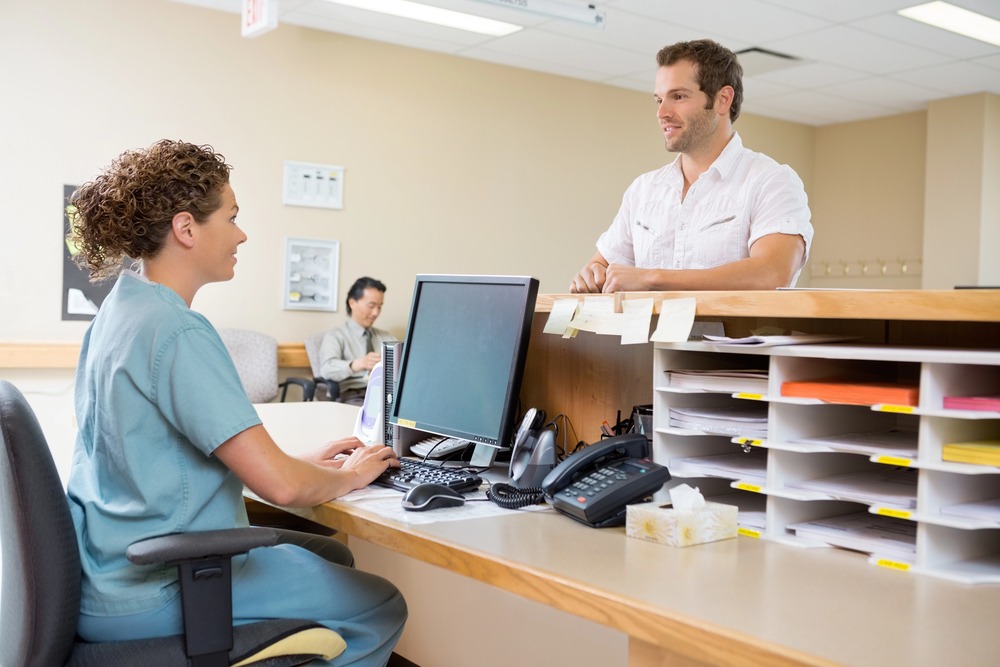
Healthcare is one of the strongest examples of why faxing continues to exist alongside newer collaboration technologies.
Medical organizations routinely exchange sensitive information with hospitals, physician practices, pharmacies, insurers, laboratories, specialists, patients, and other healthcare entities. Many of those workflows already incorporate fax numbers.
A HIPAA-compliant faxing solution allows healthcare organizations to modernize that communication without requiring every recipient to migrate to the same file-sharing platform.
Online fax may be particularly practical for transmitting:
- Medical records
- Referral documents
- Authorizations
- Lab information
- Insurance documentation
- Patient forms
Secure file sharing can still be valuable within healthcare organizations, particularly for internal document access and collaboration. The two technologies do not necessarily need to compete.
An organization might store and collaborate on documents using an internal system while using secure online fax to transmit finalized documents to external healthcare partners.
Online Fax for Legal Documents
Legal professionals routinely work with highly sensitive files, including contracts, client records, signed agreements, case documents, and correspondence.
Secure file-sharing platforms are useful when attorneys and clients need a shared workspace containing numerous files.
Faxing may be preferable when the task is simply to deliver a document to another office that accepts fax submissions.
Online faxing also removes many inconveniences associated with traditional fax equipment. Documents can be transmitted directly from a computer rather than being printed solely for faxing.
For firms moving away from legacy equipment, switching to Internet fax for business can help preserve familiar fax-based workflows while making them easier to manage digitally.
Online Fax for Financial Services
Financial organizations handle information that requires careful access controls, including account documentation, loan paperwork, financial statements, identity documents, and signed forms.
Secure file sharing can be highly effective when customers or employees need ongoing access to documents through a protected portal.
Online fax can complement those systems when the recipient expects fax delivery.
The decision should therefore be based less on which technology is newer and more on which transmission method best fits the workflow.
For organizations sending large volumes of documents, a scalable high-volume Internet fax service can also help centralize fax activity rather than distributing physical machines throughout offices.
Online Fax for Government Workflows
Government organizations have relied on fax communication for decades, and many agencies continue to publish fax numbers for particular forms, departments, and document-submission processes.
That creates an interoperability advantage for faxing.
A business may have a sophisticated cloud environment internally, but if the government office receiving a document requests that it be faxed, a file-sharing link may not be useful.
Online fax enables organizations to satisfy that requirement without keeping traditional fax hardware in every location.
It can therefore act as a bridge between modern cloud-based business processes and long-established government communication infrastructure.
The Importance of Auditability
Security is not limited to preventing unauthorized access. Organizations also need visibility into what happened to a document.
This is particularly important in regulated environments.
Businesses may need to determine:
- Who transmitted a document
- When it was sent
- Which destination received it
- Whether the transmission succeeded
- What actions users performed within the system
FAXAGE offers Internet Fax System Auditing, giving organizations greater visibility into fax activity.
Audit information can be especially valuable when companies need to investigate an incident, document internal activity, enforce security policies, or support compliance reporting.
Secure file-sharing platforms may provide their own activity logs, but organizations should evaluate exactly what information those logs capture rather than assuming all services offer equivalent reporting.
Which Is the Best Way to Send Sensitive Documents?
There is no universal best way to send sensitive documents because the correct method depends on the workflow.
Secure file sharing is often a strong choice when:
- Multiple people need access to the same files
- Teams are collaborating on documents
- Recipients regularly use the same secure portal
- Version control is important
- Documents need to remain available for repeated access
Online fax is particularly useful when:
- The recipient specifically accepts fax
- An existing workflow relies on fax numbers
- Healthcare, legal, financial, or government organizations are exchanging documents
- A business needs to communicate with both digital fax users and traditional fax machines
- Transmission tracking and fax-specific audit information are valuable
In many organizations, the most practical answer is both.
File sharing can support internal document management and collaboration while online fax handles secure external transmission to organizations that continue to rely on fax-based workflows.
What to Look for in a Secure Online Fax Provider
Organizations handling confidential documents should evaluate more than basic sending and receiving capabilities.
Security mechanisms should be a central consideration.
Look for features such as encrypted transmission, authentication controls, password protection, auditing, secure document retrieval, and appropriate compliance support.
Reliability and scalability also matter.
FAXAGE supports businesses ranging from individual professionals to organizations with large fax volumes. Plans include online fax storage, multiple transmission methods, unlimited users on FAXAGE plans, and options designed for different usage levels.
Organizations can also review FAXAGE pricing to choose a plan that fits their expected fax volume rather than maintaining physical infrastructure that may include machines, dedicated phone lines, toner, paper, and ongoing maintenance.
Online Fax and Secure File Sharing Can Work Together
The debate over online fax vs. secure file sharing does not necessarily need a single winner.
Both technologies solve legitimate document-management problems.
Secure file sharing excels when organizations need collaborative access to documents in a controlled digital environment. Online fax excels when organizations need to transmit documents securely through established fax workflows without depending on traditional fax hardware.
That distinction remains especially relevant in healthcare, legal, financial, and government environments, where organizations frequently communicate with outside parties using different technologies.
Rather than forcing every document into the same communication channel, businesses can build a layered document strategy: use secure storage and file-sharing tools for collaboration, then use secure online fax when the destination or workflow calls for fax transmission.
Choose the Right Channel for Every Sensitive Document
Sensitive information deserves a communication method selected deliberately, not simply the easiest attachment button available.
When recipients need shared access, revision capabilities, or long-term collaboration, secure file sharing can be highly effective. When an organization needs to send sensitive documents directly into an established fax workflow, online fax offers a modern way to do so without returning to legacy fax machines.
FAXAGE combines the familiarity and broad compatibility of faxing with digital features designed for today’s organizations, including secure web faxing, email fax, mobile access, API integration, auditing, and security controls.
Explore FAXAGE to learn how secure online faxing can fit alongside your existing document-management and file-sharing systems and give employees another reliable option for transmitting sensitive information.
FAXAGE® is a registered trademark of EC Data Systems, Inc.
© Copyright 2004-2026 EC Data Systems, Inc. all rights reserved